 Beyond Waves Leisure
Things to Do in Udawalawe: Safari, Elephants and Local Tips
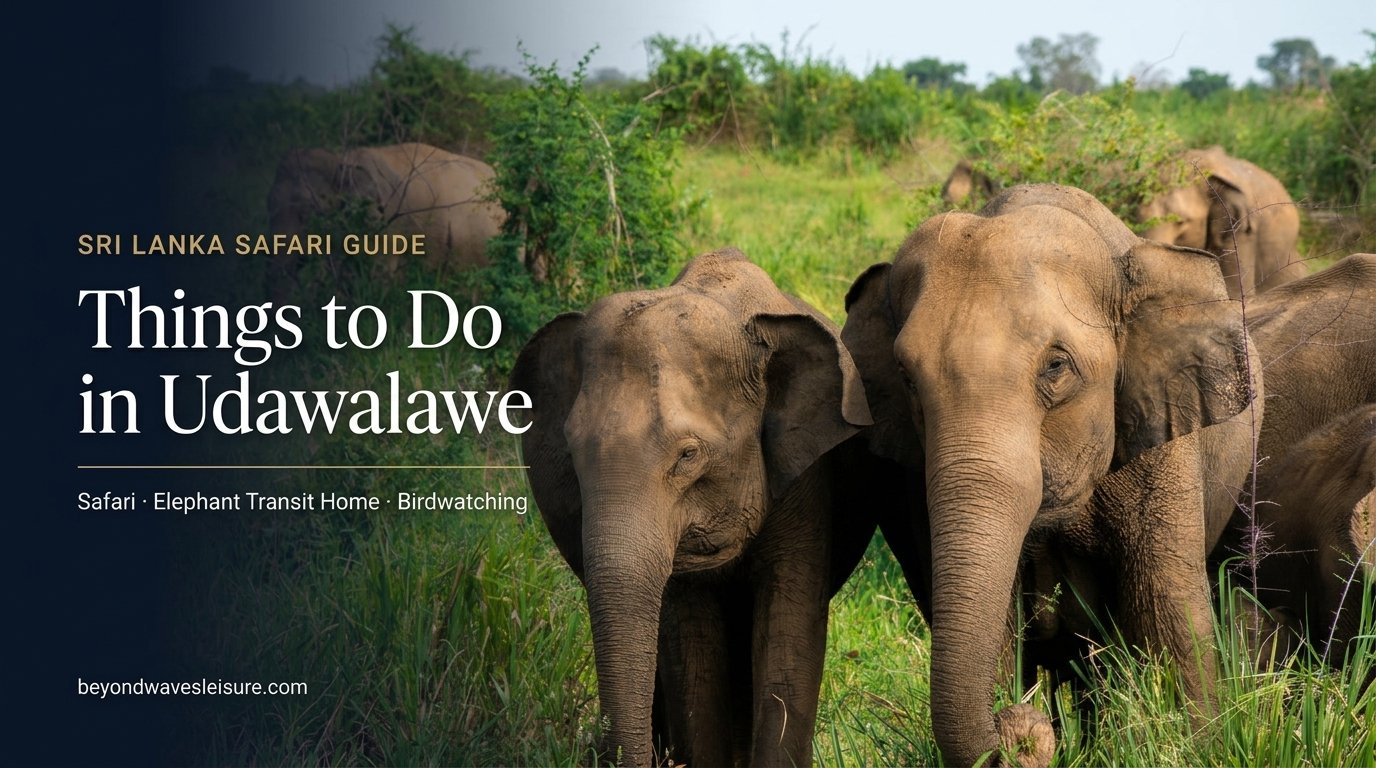
The best things to do in Udawalawe are a jeep safari to watch wild elephant herds, a visit to the Elephant Transit Home at feeding time, and slow birdwatching around the reservoir. Udawalawe is one of the most reliable places in Asia to see wild Asian elephants, and it fits neatly between Ella, Yala and the south coast. This guide shows what to do, when to go and how to plan it, with tips from the chauffeur-guides who drive the route every week.
Udawalawe quick facts
- What it is: Udawalawe National Park, about 30,800 hectares of grassland, scrub and forest around the Udawalawe Reservoir on the Walawe River.
- Famous for: large herds of wild Asian elephants, often with young calves, seen in open country.
- Park hours: 6:00 am to 6:00 pm. Morning and late afternoon drives give the best light and the most activity.
- Visit with: a licensed safari jeep and driver. Walking inside the park is not allowed.
- Time needed: half a day for a safari, or one night if you also want the Elephant Transit Home and a relaxed sunset.
- Getting there: roughly 2.5 to 3 hours by car from Ella, and around 2 hours from Galle and the south coast.
1. Take a jeep safari in Udawalawe National Park
A safari is the number one thing to do in Udawalawe, and for most travellers it is the reason to come. The park was declared in 1972, after the reservoir was built, to give a home to animals displaced by the dam and to protect the catchment. Today its open plains make elephants easy to see: families graze, dust-bathe and walk to the water only metres from the track.
Morning or afternoon?
Both work well. The morning drive (gates open at 6:00 am) is cooler, the light is soft and birds are very active. The afternoon drive (from about 2:30 pm) ends in golden light, and herds often move towards the water late in the day. If you only have one slot, our guides usually suggest the early morning, because you finish before the midday heat and still have time for the Elephant Transit Home.
Half day or full day?
A half-day safari of around 3 to 4 hours is enough for most visitors, including families with children. A full day suits keen photographers and birders who want to cover the far side of the reservoir and wait at waterholes. Bring water, a hat and sunscreen, because jeeps are open and there is little shade on the plains.
How the park tickets work
Park tickets are bought at the gate and are made up of a per-person entrance fee for foreign visitors (children pay less), plus a vehicle charge, service charge and VAT. The jeep and driver are paid separately. Rates are set by the Department of Wildlife Conservation and change from time to time, so check the current price before you go, or let your tour company arrange tickets and jeep together so there are no surprises at the gate.
2. Watch feeding time at the Elephant Transit Home
The Elephant Transit Home, run by the Department of Wildlife Conservation since 1995, cares for orphaned and injured baby elephants found in the wild. The calves are raised with as little human contact as possible and, when they are old enough, they are released back into the wild, many of them into Udawalawe National Park itself. This is what makes it different from places where elephants are kept for tourism.
Visitors watch from a viewing area at feeding time, when keepers bring milk and the young elephants come running in a noisy, happy line. Feeding usually happens several times a day, commonly around 10:30 am, 2:30 pm and early evening, but times can change, so check the board at the entrance. There is no touching, feeding or riding, which is exactly as it should be. The Transit Home is a short drive from the park entrance, so it combines easily with a morning safari.
3. Go birdwatching around the reservoir
Udawalawe is not only about elephants. More than 180 bird species have been recorded in and around the park, including Sri Lanka endemics such as the Sri Lanka junglefowl and the brown-capped babbler. Look for bee-eaters on the fence posts, raptors such as serpent eagles over the grassland, and herons, storks and cormorants along the water. In the northern winter months, migrant birds add even more variety. Ask your jeep driver for a slower, bird-focused drive if this is your interest.
4. Look for the rest of Udawalawe's wildlife
Keep your eyes open for water buffalo wallowing in pools, mugger crocodiles on the reservoir banks, spotted deer, wild boar, monkeys, monitor lizards and jackals. Leopards and sloth bears live in the park too, but sightings are rare. If leopards are your main goal, add a day in Yala. Our Yala vs Udawalawe safari guide explains which park suits which traveller.
5. Watch sunset over the Udawalawe Reservoir
The reservoir is the heart of the area, and the dam road gives wide views over the water and the park. Late afternoon, after a safari or before dinner, is a calm time to stop for photos as the light turns gold. Stay on the public road and never leave the vehicle near wild elephants.
6. Stay a night near the park
Many travellers rush through Udawalawe as a day trip between Ella and the coast. Staying one night makes the visit far more relaxed: you can do an afternoon safari on arrival, watch the Transit Home feeding the next morning, and avoid a long day in the car. The area has guesthouses, small hotels and tented camps, with options for most budgets.
7. Combine Udawalawe with Ella, Yala or the south coast
Udawalawe sits in the middle of the island's most popular southern loop, which makes it an easy stop rather than a detour:
- From Ella: drive down from the hills in the morning and be on safari the same afternoon.
- With Yala: elephants in Udawalawe, leopards in Yala. Doing both gives you the most complete wildlife experience in Sri Lanka.
- To the beaches: continue to Mirissa, Weligama or Galle for a few days by the sea after the safari.
Our Ultimate Wildlife Safari and Wild & Coastal tours already include Udawalawe, and the Family Sri Lanka tour builds it in at a pace that works for children.
Best time to visit Udawalawe
Elephants live in Udawalawe all year, so there is no bad month to see them. What changes is the weather and the grass: in drier spells, herds gather near water and are easier to find, while after heavy rain the grass grows tall and the park can close for a short time. Mornings and late afternoons are the best times of day in every season. Read our best time to visit Sri Lanka guide to plan Udawalawe around the rest of your trip.
Local tips from our chauffeur-guides
- Do not feed elephants on the road. Some wild elephants wait near the electric fence along the main road, hoping for food. Feeding them is illegal, dangerous and harmful to the animals. Enjoy them from the car and drive on.
- Book a jeep with a licensed driver who knows the park. A good driver turns off the engine near herds and gives animals space.
- Pack light: hat, sunscreen, water, a light jacket for early mornings, and binoculars or a zoom lens.
- Keep voices low near elephants with young calves, and never stand up or lean out of the jeep close to them.
- Plan the Transit Home around feeding time, not the other way round, so you do not wait in the heat.
A simple Udawalawe day plan
- Early morning: jeep safari from 6:00 am for elephants, birds and soft light.
- Late morning: Elephant Transit Home feeding, then lunch.
- Afternoon: drive on to Yala, Ella or the south coast, or rest and catch sunset by the reservoir if you are staying the night.
Frequently asked questions
Is Udawalawe worth visiting?
Yes. If seeing wild elephants is on your list, Udawalawe is one of the best places in Sri Lanka, and in Asia, to watch herds in open country. It is also easy to add to a trip between Ella and the south coast.
How many days do you need in Udawalawe?
Half a day is enough for a safari. One night is ideal if you also want the Elephant Transit Home and a relaxed pace without a long drive on the same day.
Can you see leopards in Udawalawe?
Leopards live in the park, but sightings are rare. Udawalawe is the place for elephants; for the best leopard chances, visit Yala National Park.
Can you touch or ride the elephants at the Elephant Transit Home?
No. Visitors watch feeding time from a viewing area. The calves are kept as wild as possible so they can be released back into the wild later.
Is Udawalawe good for children?
Yes. A half-day safari is short enough for children, elephants are easy to see, and feeding time at the Transit Home is a favourite with families. Bring snacks, water and sun protection.
Plan your Udawalawe safari with us
Beyond Waves Leisure plans private, chauffeur-guided tours across Sri Lanka by car or van, and we can arrange your Udawalawe safari, jeep and timing around the rest of your route. See our Udawalawe National Park page for more, then send us your travel dates and we will suggest the best way to fit Udawalawe into your trip. Rates on request.
Plan this trip with us
We'll build a private, tailor-made version around your dates — and add dental or Ayurveda care if you'd like.